Category: Articles

  • Transgenders and Transsexuals in Islam

    Transgenders and Transsexuals in Islam

    Answered by Shaykh Yūsuf Badāt

    Question:

    Can you please tell me if the Qurʾān or ḥadīth (islamic source texts) mention how transsexual people should live? Is it permissible for them to change gender? Are they allowed to marry? I feel for them and do understand they suffer a pain with no bounds. Would appreciate very much if you can enlighten me with the knowledge of Islam regarding the issue.

    Answer:

    In the Name of Allāh, Most Merciful, Most Kind

    Jazāk Allāh Khayr/ Thank you for your question.

    Transgender and transsexual people should not be confused with intersexes.

    People who identify as transgender or transsexual are usually people who are born with typical male or female anatomies but feel as though they have been born into the ‘wrong body’. These individuals can gain psychological, emotional treatment and guidance through counselling and therapy.

    Intersexes are people having reproductive organs or external sexual characteristics of both male and female. The Islamic rulings regarding them is to determine their gender as best as possible, as specified below. If there are more masculine traits and signs, then they are to be treated and dealt with as males. If there are more signs of femininity, then the rules of females will apply.

    Some jurists base the verdict, looking at signs before and after puberty.

    Signs of masculinity and maleness:

    • To urine from the penis
    • Semen discharge from penis
    • Beard growth
    • Is able to impregnate
    • Possesses general male habits, actions and demeanours

    Signs of femininity:

    • To urinate from vaginal urethra
    • To experience menses
    • Breasts growth
    • Having breast-milk
    • Pregnancy and or childbirth

    These individuals are to be respected, integrated in society and treated well, just as anyone else is. They may marry and pray in congregation as well.

    There are countless opinions amongst the jurists, regarding the ‘al khunthā al mushkilah’ (when masculinity and femininity signs are equal in all perspectives). Each specific case may require analysis and the ruling is given accordingly.

    It is prohibited to have a sex reassignment surgery according to Islamic guidelines, since Islamic teachings require its adherents to understand that humans do not have absolute autonomy over their bodies. Muslims are encouraged to follow the laws of the Qurʾān and dictates of the ḥadīth.

    It must also be noted that transgenders and intersexes are not to be discriminated against. They deserve equality in the communities.

    (See: Al Mawsūʾat Al Fiqhīyyah)

    And Allāh Knows Best

  • Preparing for “Rainy Weather”

    Preparing for “Rainy Weather”

    By Shaykh Sulaiman Moola

    Humans by nature are prone to plan long-term and prepare in advance.

    The English proverb is well known, “It wasn’t raining when Noah (peace and blessings upon him) built the ark”.

    Nowadays, there are so many different retirement policies and packages on the market that the consumer is confused which one to choose.

    The Messenger (peace and blessings upon him) on the other hand has taught us a very simple and easy formula to attract the mercy of Alimighty Allāh during the hour of need and crisis.

    He (peace and blessings upon him) once said to the young Ibn ‘Abbās (may Allāh be pleased with him),

    تعرف إلى الله في الرخاء يعرفك في الشدة

    “Turn to Allāh in prosperity and He will respond to you in adversity.” (Musnad Aḥmad)

    Yet, in another narration it appears that the Messenger (peace and blessings upon him) had said,

    من سره أن يستجيب الله له عند الشدائد والكرب، فليكثر الدعاء في الرخاء

    “Whomsoever desires that Allāh, the Almighty, should answer their prayers at the time of difficulties, should engage in excessive supplication during prosperity.” (Tirmidhī)

    Ibn Qays has also echoed the same sentiments by saying,

    اذكروا الله في الرخاء ، يذكركم في الشدة

    “Glorify Allāh in ease and He will remember [and assist] you during moments of difficulty” (Jāmi’ al Ulūm wa al Ḥikam)

    The Great Companion Salmān (may Allāh be pleased with him) would say,

    إذا كان الرجل دعاء في السراء ، فنزلت به ضراء ، فدعا الله تعالى ، قالت الملائكة صوت معروف فشفعوا له .

    “If a person worships Allah in prosperity, after which he is struck by a calamity and then calls out to Allāh for help, the angels say amongst themselves, this is a familiar voice, so intercede to Allāh for his deliverance.” (Jāmi’ al Ulūm wa al Ḥikam)

    Ibn Rajab Hanbalī (may Allāh’s mercy be upon him) has cited two examples amongst others to elucidate the above theory.

    The first being that of the Prophet Yūnus (peace and blessings upon him) who worshipped Almighty Allāh perpetually. He was then swallowed by the fish, as explained in the Qur’ān. Subsequently when he called out to Allāh from the belly of the fish, the angels proclaimed, “This is surely a familiar voice, but an unknown location.” Almighty Allāh said to the angels, “Do you not know who that is? The angles (curiously) asked, “Who is he?” Allāh replied, “It is my servant Yūnus (peace and blessings upon him)”. The angels further added, “Is it the very same servant Yūnus whose virtuous actions constantly ascend to the heavens?” Almighty Allāh replied in the affirmative. The angels then pleaded to Allāh to rescue him as a result of his worship during prosperity. Allāh then accepted their intercession and granted Yūnus (peace and blessings upon him) deliverance.

    Pharaoh on the other hand, disobeyed Almighty Allāh and rebelled against Him. When he was overpowered by drowning, he also called out to Allāh desperately, but to no avail, simply because he was arrogant during prosperous moments and not submissive. Allāh said to him,

    آلْآنَ وَقَدْ عَصَيْتَ قَبْلُ وَكُنتَ مِنَ الْمُفْسِدِينَ

    “Now (you decide to repent)? while you disobeyed previously and you were amongst the evil doers.” (Qur’ān 10:91)

    May the Almighty protect us from the fate of Pharaoh and his likes. May He grant us the ability to worship Him during moments of prosperity and adversity alike. Āmīn

  • Shaykh Sulaiman Moola in North America

    Shaykh Sulaiman Moola in North America

    27 July 2017 – (Letter of Support. – This is NOT a petition)

    In the Name of Allah, the Most Merciful the Most Compassionate

    This is to note that the presence and participation of Shaykh Sulaiman Moola of South Africa at various events and conferences across Canada and America is of great benefit.

    We (affiliates and or students of Shaykh Sulaiman Moola) the undersigned, have observed only good from the Shaykh. He has been a motivation and inspiration for countless youth and adults likewise, in connecting the masses with the Qur’an, Sunnah and pious predecessors. Many have chosen the route of becoming Aalim due to his discourses in North America.

    Even though at some rare events, the arrangements or logistics may not be in accordance to specific criteria of a particular perspective or fiqh persuasion, the Shaykh has always left the audience with a positive impact related to the religion and advised organizers of bringing positive transformation. We regard Shaykh Sulaiman Moola as a great role model for the Muslim masses. If any matter at these events went in contrast to the noble deen in his presence, the Shaykh has always done his part in advising and mentoring, to both other speakers and also organizers.

    We support Shaykh Sulaiman Moola and continue to pray for him. May Allah continue to take great service of His deen from him, from various platforms. We look forward to his presence at our events and conferences.

    Jazak Allah Khayr

    Signatories:

    • Yusuf Badat
    • Abdullah Ayaz Mullanee
    • Abdullah Hatia
    • Abdullah Syed
    • AbdulRahman bin Hanif
    • Amjad Khan
    • Aref Varachhia
    • Ashraf Hanslod
    • Asif Khan
    • Habib Hasaan
    • Huzeifa Patel
    • Ibrahim Fayaz
    • Idris Ingar
    • Imran Khan
    • Irshad Unia
    • Junaid Kazi
    • Junaid Panchbhaya
    • Mazhar Mahmood
    • Mohammed Bemat
    • Mohammed Mamun
    • Mohammed Panchbhaya
    • Mohammed Wasim Khan
    • Muhammad Farooq
    • Muhammad Nabil
    • Muhammed Rizwan
    • Nayeem Kazi
    • Noman Hussain
    • Omar Abdur Rahman
    • Omar Subedar
    • Saad Baig
    • Sahil Karnelia
    • Shakir Pandor
    • Shoaib Wardak
    • Sohel Desai
    • Syed Shah Mohammed Quadri
    • Talha Momla
    • Yasir Saleem
    • Yusuf bin Yaqub Jakda
    • Yusuf Patel
    • Zahid Cheena

    If you are an affiliate or student of Shaykh Sulaiman Moola in North America, and would like to be a signatory, please email: yusuf@mathabah.org.

    Jazakumullahu Khayran

  • Who is she?

    Who is she?

    Spoken word by Waqas Choudhry

    We rise every morning in hopes of a good day. Some get ready for work, to get their pay.

    Life you see, it’s all become a daily routine. One day after another with no bother.

    “I’ll be late today, don’t wait for me to eat”, we say, she packs me a lunch anyway.

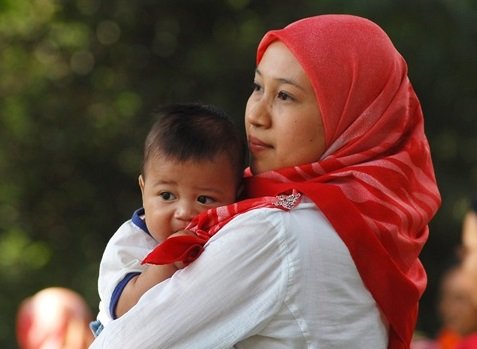
    Who is she? She is a mother, that one person who will do anything for you without a bother. If only we ponder!

    We spend all day chilling with our friends with no worries, coming home to help her should be our thing, but do we even bother?

    You see she struggles all day for us, waits until we get off the bus.

    Who is she? She is a mother, that one person who will do anything for you without a bother. If only we ponder!

    As she gets older, wrinkles begin to appear, she smiles so we don’t fear.

    We neglect her rather than protect her. How great of a blessing we forget?

    She’s a gift from Allah, which we must protect.

    Pray for her, cherish her for all she does, because life will pass by as fast as a speeding bus.

    Who is she? She is a mother, that one person who will do anything for you without a bother. If only we ponder!

  • Transforming a House in to a Home

    Transforming a House in to a Home

    [vc_row][vc_column][vc_column_text]By Shaykh Sulaiman Moola

    Houses are built of brick and stone, but homes are made of love alone.
    Home is where you hang your “heart” and where the small are great and the great are small.

    The Messenger (peace and blessings upon him) has said, “Control your tongue, let your house accommodate you and lament your sins.”

    In the previous times, couples did not have a house nor a home at the inception of marriage, but mutual love and commitment got them both, while the average couple today commences life with a palatial house and they are expected to make a home only, but sadly few accomplish it.

    One of the finest examples to cite, of a home, is that of Abū Talha (may Allāh be pleased with him) and his wife Umm Sulaym (may Allāh be pleased with her).

    Allāh Almighty had blessed the union with a child, which is a definite source of joy and happiness. Fate and destiny had it such that the little boy took ill. His dad (Abū Tālha) was out for some work. By the will of Allāh, the little boy passed away.

    Umm Sulaym (may Allāh be pleased with her) bathed her deceased son, wrapped him in a “Kafn” (shroud of white cloth) and patiently endured the will of Almighty Allāh. She then told the other members of the family, “Do not tell Abū Talha about the death of his son. Rather, I will convey it to him at the appropriate time.”

    Subsequently, Abū Talha returns “Home”.
    He enquired from his wife regarding the wellbeing of the little boy. The reply of this woman was most amazing. She said, “He is more peaceful than what he was”.

    Allāhu Akbar! What an amazing woman and what a diplomatic reply!

    Nowadays we talk about psychology, sensitivity, euphemism etc. but seldom do we walk the talk. This woman (Umm Sulaym) said it all in one statement. Without alarming her husband, or speaking a lie, she navigated wisely through the crisis. He on the other hand, assumed “peaceful” to mean, recovery and recuperation, but alas the little boy had moved on in to the mercy of Allāh. She then provided food for her partner, after which she adorned herself. The couple then met in seclusion and had relationship. The narration further goes on to say, when she realised that her husband was relaxed and composed, she whispered to him, “O my hubby, can I please ask you a question?”
    “Yes indeed”, was the reply.
    She asked, “If somebody lends you an article for a period of time and the duration expires, can you withold the item?” He obviously replied in the negative, but couldn’t understand the relevance of the question at this juncture.
    With a tear in her eye and a crack in her voice, she said, “Almighty Allāh had lent us our lad for a period of time and the duration has certainly expired, hence he has returned to Allāh.”

    ‎إِنَّا لِلّهِ وَإِنَّا إِلَيْهِ رَاجِعونَ

    ‘To Allāh we belong and to Him shall we return’

    He broke down, sobbing away. She comforted and consoled him and together they healed each other.

    Allāhu Akbar (Allāh is the Greatest)

    This indeed is a home.
    This is what the Qur’ān refers to as a place of comfort.

    On the reverse of that, is our pitiful state.
    Sadly, we have taken every possible step to enhance the comfort of our dwellings but have done very little to transform the house in to a “Home”.

    Instead of planning your next holiday, perhaps it is time to design a “Home” you do not want to flee from.[/vc_column_text][/vc_column][/vc_row]