Welcome to WordPress. This is your first post. Edit or delete it, then start writing!
Blog
-

Transgenders and Transsexuals in Islam
Answered by Shaykh Yūsuf Badāt
Question:
Can you please tell me if the Qurʾān or ḥadīth (islamic source texts) mention how transsexual people should live? Is it permissible for them to change gender? Are they allowed to marry? I feel for them and do understand they suffer a pain with no bounds. Would appreciate very much if you can enlighten me with the knowledge of Islam regarding the issue.
Answer:
In the Name of Allāh, Most Merciful, Most Kind
Jazāk Allāh Khayr/ Thank you for your question.
Transgender and transsexual people should not be confused with intersexes.
People who identify as transgender or transsexual are usually people who are born with typical male or female anatomies but feel as though they have been born into the ‘wrong body’. These individuals can gain psychological, emotional treatment and guidance through counselling and therapy.
Intersexes are people having reproductive organs or external sexual characteristics of both male and female. The Islamic rulings regarding them is to determine their gender as best as possible, as specified below. If there are more masculine traits and signs, then they are to be treated and dealt with as males. If there are more signs of femininity, then the rules of females will apply.
Some jurists base the verdict, looking at signs before and after puberty.
Signs of masculinity and maleness:
- To urine from the penis
- Semen discharge from penis
- Beard growth
- Is able to impregnate
- Possesses general male habits, actions and demeanours
Signs of femininity:
- To urinate from vaginal urethra
- To experience menses
- Breasts growth
- Having breast-milk
- Pregnancy and or childbirth
These individuals are to be respected, integrated in society and treated well, just as anyone else is. They may marry and pray in congregation as well.
There are countless opinions amongst the jurists, regarding the ‘al khunthā al mushkilah’ (when masculinity and femininity signs are equal in all perspectives). Each specific case may require analysis and the ruling is given accordingly.
It is prohibited to have a sex reassignment surgery according to Islamic guidelines, since Islamic teachings require its adherents to understand that humans do not have absolute autonomy over their bodies. Muslims are encouraged to follow the laws of the Qurʾān and dictates of the ḥadīth.
It must also be noted that transgenders and intersexes are not to be discriminated against. They deserve equality in the communities.
(See: Al Mawsūʾat Al Fiqhīyyah)
And Allāh Knows Best
-

Preparing for “Rainy Weather”
By Shaykh Sulaiman Moola
Humans by nature are prone to plan long-term and prepare in advance.
The English proverb is well known, “It wasn’t raining when Noah (peace and blessings upon him) built the ark”.
Nowadays, there are so many different retirement policies and packages on the market that the consumer is confused which one to choose.
The Messenger (peace and blessings upon him) on the other hand has taught us a very simple and easy formula to attract the mercy of Alimighty Allāh during the hour of need and crisis.
He (peace and blessings upon him) once said to the young Ibn ‘Abbās (may Allāh be pleased with him),
تعرف إلى الله في الرخاء يعرفك في الشدة
“Turn to Allāh in prosperity and He will respond to you in adversity.” (Musnad Aḥmad)
Yet, in another narration it appears that the Messenger (peace and blessings upon him) had said,
من سره أن يستجيب الله له عند الشدائد والكرب، فليكثر الدعاء في الرخاء
“Whomsoever desires that Allāh, the Almighty, should answer their prayers at the time of difficulties, should engage in excessive supplication during prosperity.” (Tirmidhī)
Ibn Qays has also echoed the same sentiments by saying,
اذكروا الله في الرخاء ، يذكركم في الشدة
“Glorify Allāh in ease and He will remember [and assist] you during moments of difficulty” (Jāmi’ al Ulūm wa al Ḥikam)
The Great Companion Salmān (may Allāh be pleased with him) would say,
إذا كان الرجل دعاء في السراء ، فنزلت به ضراء ، فدعا الله تعالى ، قالت الملائكة صوت معروف فشفعوا له .
“If a person worships Allah in prosperity, after which he is struck by a calamity and then calls out to Allāh for help, the angels say amongst themselves, this is a familiar voice, so intercede to Allāh for his deliverance.” (Jāmi’ al Ulūm wa al Ḥikam)
Ibn Rajab Hanbalī (may Allāh’s mercy be upon him) has cited two examples amongst others to elucidate the above theory.
The first being that of the Prophet Yūnus (peace and blessings upon him) who worshipped Almighty Allāh perpetually. He was then swallowed by the fish, as explained in the Qur’ān. Subsequently when he called out to Allāh from the belly of the fish, the angels proclaimed, “This is surely a familiar voice, but an unknown location.” Almighty Allāh said to the angels, “Do you not know who that is? The angles (curiously) asked, “Who is he?” Allāh replied, “It is my servant Yūnus (peace and blessings upon him)”. The angels further added, “Is it the very same servant Yūnus whose virtuous actions constantly ascend to the heavens?” Almighty Allāh replied in the affirmative. The angels then pleaded to Allāh to rescue him as a result of his worship during prosperity. Allāh then accepted their intercession and granted Yūnus (peace and blessings upon him) deliverance.
Pharaoh on the other hand, disobeyed Almighty Allāh and rebelled against Him. When he was overpowered by drowning, he also called out to Allāh desperately, but to no avail, simply because he was arrogant during prosperous moments and not submissive. Allāh said to him,
آلْآنَ وَقَدْ عَصَيْتَ قَبْلُ وَكُنتَ مِنَ الْمُفْسِدِينَ
“Now (you decide to repent)? while you disobeyed previously and you were amongst the evil doers.” (Qur’ān 10:91)
May the Almighty protect us from the fate of Pharaoh and his likes. May He grant us the ability to worship Him during moments of prosperity and adversity alike. Āmīn
-
Hajj while Still Repaying Loan Installments
Answered by Shaykh Yusuf Badat
Question:
My husband had taken a car loan and the repayment installments will continue another 2-3 years. We are planning to perform Hajj very soon. Would it be permissible to perform Hajj during the loan repayment period?
Answer:
Jazakumullahu Khayran/ Thank you for your question.
May Allah bless you for your sincere intentions to increase in rendering good deeds.
It is important to note that paying off debts is an obligatory injunction and one will be questioned regarding outstanding debts by Almighty Allah. There is no doubt that it would be strongly advised to pay off your debts rather than proceed for Hajj.
It is however worthy to mention that your Hajj would still be considered complete In-sha Allah, if you do choose to proceed without settling debts.
Some amongst the learned have also stated that if you seek permission from your creditors, or in the case where you are making steady installment payments, that would not be affected due to the Hajj journey, there would be no objection in proceeding for Hajj.
Regarding debt, the Prophet (peace and blessings be upon him) has stated,
“I seek protection from disbelief and debt” (Nasai, Hakim)
“The one who dies in a state having even a single [outstanding] gold or silver coin, the matter will be settled (with creditors) through his good deeds, as there is no gold or silver (currency) in the hereafter.” (Ibn Majah, Tabrani)
Allah Knows Best.
-
Hajj for a Deceased Person
Answered by Shaykh Yusuf Badat
Question:
Can we “perform haj” for a dead person?
Answer:
Jazakumullahu Khayran/ Thank you for your question.
In principle, both Ḥajj and ‘Umrah can be performed on behalf of another believer, regardless of whether they are a parent or a non-relative, sickly, healthy, alive or deceased.
It is worthy to note that some Islamic jurists have stated that one must be delegated to render Ḥajj or ‘Umrah on behalf of another.
Some jurists have also specified that Ḥajj or ‘Umrah on behalf of another should only be rendered when the individual delegating is unable [has a disability] or deceased. (See: Masū’ah al Fiqhiyyah)
Abū Razīn Al-‘Aqīlī [Laqīṭ ibn Āmir] (may Allāh be pleased with him) reports he came to the Prophet (peace and blessings upon him) and asked, “O Messenger of Allāh, my father is very old, unable to perform Ḥajj or ‘Umrah nor able to travel” The Prophet (peace and blessings upon him) said, “Perform Ḥajj and ‘Umrah on behalf of your father!” (Tirmidhī)
A woman came to the Prophet (peace and blessings upon him) and asked, “My mother is deceased and was unable to perform Ḥajj, can I perform Ḥajj on her behalf? The Prophet (peace and blessings upon him) said, “Yes, do perform Ḥajj on her behalf!” (Tirmidhī)
And Allah Knows Best.
-
Use of Contraceptives During Hajj
Answered by Shaykh Yusuf Badat
Question:
For women, if our menses fall during Hajj or last ten days of Ramadan, is it okay to use contraceptives to delay our cycle so we can pray and fast on those days?
Answer:
Jazakumullahu Khayr/ Thank you for your question.
In such situations, it is advisable to consult medical experts. If they assure you that there would be no adverse side effects due to artificially delaying the menstruation, then it would be permissible otherwise not.
Allah Knows Best
-

Ritual Sacrifice (Udhiyyah/ Qurbani) on Behalf of the Deceased
Answered by Shaykh Yūsuf Badāt
Question:
I have two questions regarding the Qurbānī (ritual animal slaughter) during ‘Eīd Al Adha. During the days of ‘Eīd Al Adha, it has been customary in our culture to slaughter on behalf of deceased relatives and also on behalf of the Prophet (peace and blessings upon him).
I would like to obtain the religious verdict regarding the following:
- Is it permissible to slaughter (Qurbānī) on behalf of the deceased?
- Is it permissible to slaughter (Qurbānī) on behalf of the Prophet (peace and blessings upon him)?
Answer:
Thank you/ Jazākumullāhu Khayran for your question. Your commitment to learning the correct position in matters related to the religion is admirable.
The response to your concerns is as follows:
- It is permissible to slaughter Udhiyyah animals for Allāh’s sake on behalf of the deceased with the intention the reward of the good deed would reach them. This would be considered an optional act (nafl).
- It is also permissible to slaughter Udhiyyah animals for Allāh’s sake on behalf of the Prophet (peace and blessings upon him) with the intention of rendering an act of goodness. This again would be considered an optional deed (nafl).
Please refer to the following hadīths:
‘Alī (may Allāh be pleased with him) reports, “The Prophet (peace and blessings upon him) instructed me to slaughter on his behalf. Therefore, I will continue to slaughter (Udhīyyah) on his behalf as long as I live”. (Tirmidhī, Abu Dawud, Musnad Ahmed)
Hamash (may Allāh be pleased with him) says, “I saw Alī (may Allāh be pleased with him) slaughtering two sheep, so I asked him why he is slaughtering two sheep.” He said, “The Prophet (peace and blessings upon him) made a bequest that I should render Udhīyyah for him.” (Tirmidhī).
Abbās (may Allāh be pleased with him) says that Sā’d ibn Ubādah (ra) was away when his mother passed away. When he returned he asked the Messenger of Allāh (peace and blessings upon him), “Will it be of any benefit if I give charity on her behalf? The Prophet (peace and blessings upon him) replied in the affirmative”. (Bukhāri)
And Allāh Knows Best.
-

Udhiyyah/ Qurbani for a Household
Answered by Shaykh Yusuf Badat
Question:
My wife and I both have our own income from jobs. Normally we do one sacrifice on Eid ul Adha that is either goat or sheep with the intention that this is from both of us. Do we need to do separate sacrifices of two goat or sheep, one from me and one from my wife?
Answer:
Jazakumullahu Khayran / Thank you for your question.
Qurbani / Udhiyyah sacrifice is required from every individual who owns Zakah Nisab (amount of wealth that causes Zakah to be mandatory on a believer). Thus, in your situation, both husband and wife should render two separate individual goat or sheep for Qurbani (Udhiyyah).
“Whoever has the [financial] capacity [to offer the sacrifice] and does not offer the sacrifice, they should not come near our place of prayer.” (Ibn Mājah)
And Allah Knows Best
-
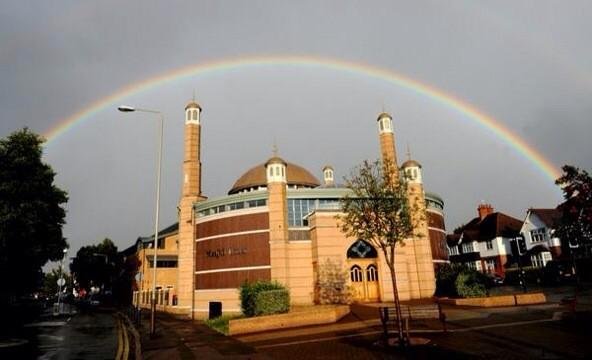
Is it Better to Pray at the Local Mosque than a Distant Masjid?
Answered by Shaykh Yūsuf Badāt
Question:
I would like to know whether it is better to perform ṣalāh in a muṣallāh or in a masjid? Does my local masjid have more rights over me than other masājids; (Should I be performing ṣalāh in my local masjid instead of going elsewhere just so I can listen to different recitations for my nafs)?
Answer:
Jazākumullāhu Khayran for your questions.
In general, every masjid is a place of prayer and worship. One will In-shā Allāh attain rewards whether one offers prayers in their local masjid or at a distant mosque.
Most classical scholars and jurists have pointed out that one’s local masjid or muṣallāh, where the five congregational prayers take place on a permanent basis, has more right than a distant masjid. (See: Rad al Mukhtār, Al Mughnī & Al Majmū’)
Some of the reasons cited are as follows:
- The right of being in the same neighbourhood
- It is a means to populate the local masjid and increase the local congregation
- It is a means to stay affiliated and establish bonds with the local imam and community
- It saves one from being a target of unnecessary allegations regarding skipping congregational prayers
The great jurist, Imam Ibn ‘Ābidīn (may Allah’s mercy be with him) writes,
ومسجد حيه وإن قلَّ جمعه أفضل من الجامع؛ وإن كثر جمعه
“One’s local neighbourhood masjid, even though the congregation may be smaller, is superior [for rewards] than the larger [distant] masjid, even though the congregation there is larger.” (Rad al Mukhtār)
There is a view of some jurists that if one attends a distant masjid, leaving aside one’s local masjid, with a specific intention to attain the rewards of a larger congregation, or for some other reason such as avoiding loud distractions that might be present at the local masjid, or the imam at the distant masjid has excellence in recitation and or delivers a discourse after the prayer, then it would not be objectionable to attend the distant masjid, provided that one is not causing a negative perception, distaste and or deficiency at the local masjid. (See Al Majmū’ li al Nawawī)
And Allāh Knows Best
-

Ghusl – Ritual Bath
Answred by Shaykh Yusuf Badat
Question:
How to attempt ghusl? What are the fard steps?
Answer:
Thank you for your question.
Ghusl (Ritual Islamic bath) is completed when one renders the following:
- Making the intention for ghusl (in accordance to some jurists)
- Washing the entire external body to the extent that not even a single hair is left dry
- Gargling and cleaning the nose (in accordance to most jurists)
Ali (may Allah be pleased with him) stated, “The one who leaves a hair’s span of filth from ritual impurity, without washing it, will be dealt with severely in the hell fire” [Abu Dawud]
Ibn `Abbas (may Allah be pleased with him) said, “When a person with ritual impurity takes a bath and forgets to rinse his mouth and nose, he should redo the cleaning of the mouth and nose.” [Dar Qutni]
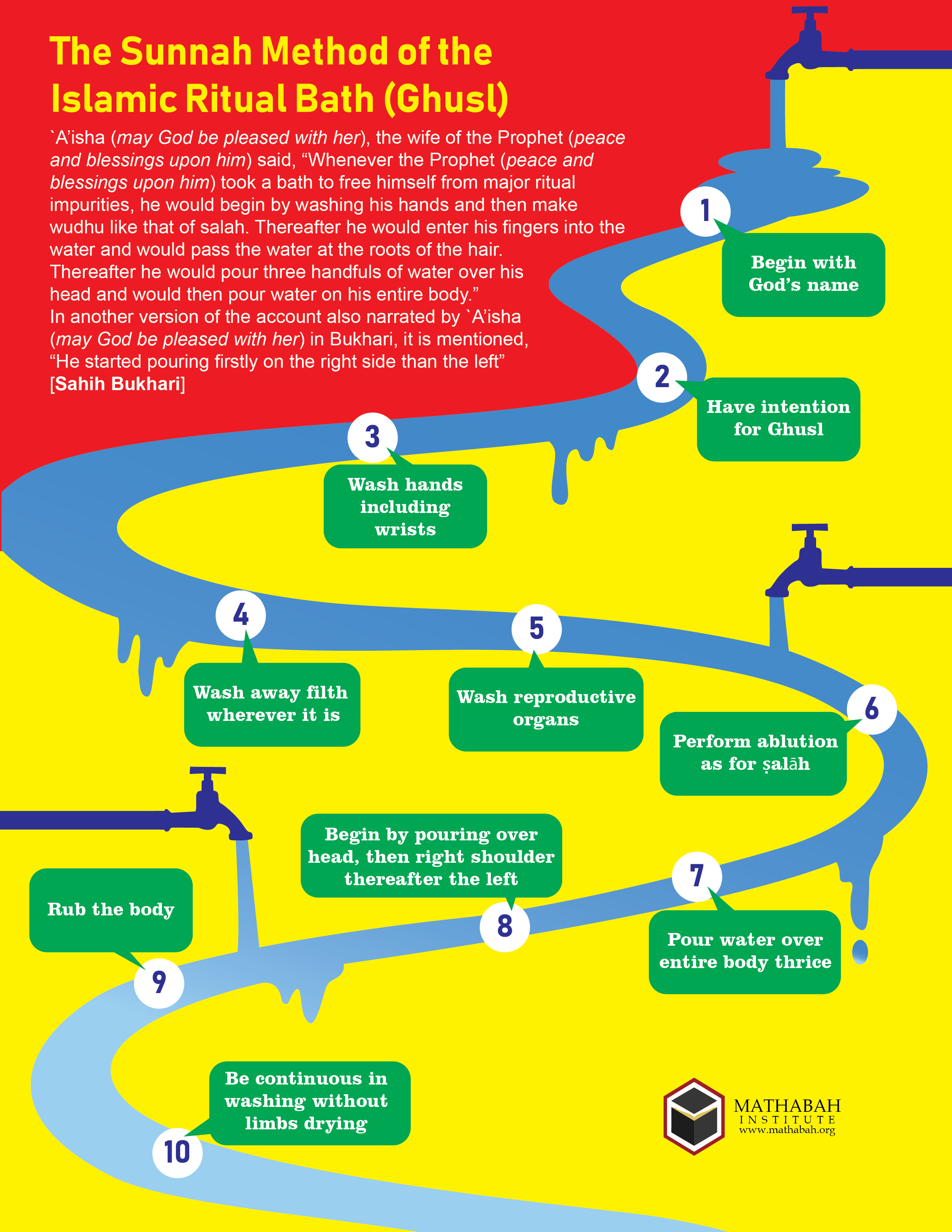
The Sunna Method of the Ritual Bath
- Begin with bismillah ‘In the Name of Allah the Most Beneficent, The Most Merciful’
- Make the intention of performing Ghusl
- Wash the hands up to and including the wrists
- Wash away any filth irrespective of where it is
- Wash the reproductive organs
- Perform wudhu’ as one does for saläh
- Pour water over the entire body thrice
- Begin by pouring water over the head, then the right shoulder thereafter the left
- Rub the body
- Be continuous in washing [one should not wait so long that the previously washed limbs become dry].
`A’isha (may Allah be pleased with him), the wife of the Prophet (peace and blessings upon him) said, “Whenever the Prophet (peace and blessings upon him) took a bath to free himself from major ritual impurities, he would begin by washing his hands and then make wudhu like that of salah. Thereafter he would enter his fingers into the water and would pass the water at the roots of the hair. Thereafter he would pour three handfuls of water over his head and would then pour water on his entire body.”
In another version of the account also narrated by `Ä’isha (may Allah be pleased with him) in Bukhari, it is mentioned, “He started pouring firstly on the right side than the left” [Sahih Bukhari]
And Allah Knows Best.