Author: digitalwebsystems2

  • A Marriage Forced by Parents

    A Marriage Forced by Parents

    Answered by Shaykh Yusuf Badat

    Question:

    My parents are forcing me to get married and I do not know what to do. I have tried a million times to talk to them but it is not working. What should I do? Please give me real advice as this is affecting me mentally.

    Answer:

    Jazakumullahu Khayr/ Thank you for your question. May Allāh bless you with success and prosperity. May He relive you of the stressful situation.

    Communication is very important in matters such as determining a suitable marriage partner. In most cases, parents are looking out for the best, regarding their children. Parents are duty bound to provide encouragement and sincere guidance. However, parents are not to force their children into a marriage.

    You should respectfully communicate to your parents, your choice of a good spouse. Your consent is mandatory for the marriage to be valid. It is recommended that you respectfully and openly speak to your parents related to your specific intentions of a marriage partner. This can be rendered by communicating with the more approachable parent first. Trusted relatives can also be involved in the discussions. Caring parents will be understanding and help deal with the situation.

    In some situations, there are cultural barriers, which have nothing to do with Islam. These cultural practices become an obstacle for a genuine, responsible individual to marry a partner of his or her choice. In such situations, a little patience is required. Respectful and open discussions should take place with parents and elders of the families. Community imams who understand the situation may also play an important role in facilitating appropriate steps for the marriage to materialize. Seek help from trusted community resources.

    “A previously married woman has more right regarding herself than her guardian, and the permission of a virgin must be sought (for marriage)” (Saḥīḥ Muslim)

    “A young woman came to the Prophet (peace and blessings upon him) and told him that her father had married her off against her will. The Prophet (peace and blessings of upon him) gave her the choice (to nullify the marriage or stay in the marriage)” (Sunan Abī Dawūd)

    “It is not permissible for the guardian to force a sane mature virgin woman to marry… if she refuses (to marry someone), she cannot be made to marry” (Mukhtaṣar al Qudūri)

    And Allah Knows Best

  • Shaykh Sulaiman Moola in North America

    Shaykh Sulaiman Moola in North America

    27 July 2017 – (Letter of Support. – This is NOT a petition)

    In the Name of Allah, the Most Merciful the Most Compassionate

    This is to note that the presence and participation of Shaykh Sulaiman Moola of South Africa at various events and conferences across Canada and America is of great benefit.

    We (affiliates and or students of Shaykh Sulaiman Moola) the undersigned, have observed only good from the Shaykh. He has been a motivation and inspiration for countless youth and adults likewise, in connecting the masses with the Qur’an, Sunnah and pious predecessors. Many have chosen the route of becoming Aalim due to his discourses in North America.

    Even though at some rare events, the arrangements or logistics may not be in accordance to specific criteria of a particular perspective or fiqh persuasion, the Shaykh has always left the audience with a positive impact related to the religion and advised organizers of bringing positive transformation. We regard Shaykh Sulaiman Moola as a great role model for the Muslim masses. If any matter at these events went in contrast to the noble deen in his presence, the Shaykh has always done his part in advising and mentoring, to both other speakers and also organizers.

    We support Shaykh Sulaiman Moola and continue to pray for him. May Allah continue to take great service of His deen from him, from various platforms. We look forward to his presence at our events and conferences.

    Jazak Allah Khayr

    Signatories:

    • Yusuf Badat
    • Abdullah Ayaz Mullanee
    • Abdullah Hatia
    • Abdullah Syed
    • AbdulRahman bin Hanif
    • Amjad Khan
    • Aref Varachhia
    • Ashraf Hanslod
    • Asif Khan
    • Habib Hasaan
    • Huzeifa Patel
    • Ibrahim Fayaz
    • Idris Ingar
    • Imran Khan
    • Irshad Unia
    • Junaid Kazi
    • Junaid Panchbhaya
    • Mazhar Mahmood
    • Mohammed Bemat
    • Mohammed Mamun
    • Mohammed Panchbhaya
    • Mohammed Wasim Khan
    • Muhammad Farooq
    • Muhammad Nabil
    • Muhammed Rizwan
    • Nayeem Kazi
    • Noman Hussain
    • Omar Abdur Rahman
    • Omar Subedar
    • Saad Baig
    • Sahil Karnelia
    • Shakir Pandor
    • Shoaib Wardak
    • Sohel Desai
    • Syed Shah Mohammed Quadri
    • Talha Momla
    • Yasir Saleem
    • Yusuf bin Yaqub Jakda
    • Yusuf Patel
    • Zahid Cheena

    If you are an affiliate or student of Shaykh Sulaiman Moola in North America, and would like to be a signatory, please email: yusuf@mathabah.org.

    Jazakumullahu Khayran

  • Brushing Teeth While Fasting

    Brushing Teeth While Fasting

    Answered by Shaykh Yūsuf Badāt

    Question:

    Are you allowed to brush your teeth when fasting? If not, how do you get rid of bad breath so people are not uncomfortable around you?

    Answer:

    Thank you/ Jazākumullāhu Khayran for your question. May Almighty Allāh accept your fasting.

    Brushing the Teeth in General While Fasting

    Brushing the teeth during fasting is permissible and an established practice of the Prophet Muḥammed (peace and blessings upon him).

    Rabī’ah (may Allāh be pleased with him) states, “I seen the Prophet (peace and blessings upon him) on countless occasions, brushing his teeth with the siwāk (tooth stick), while he was in the state of fasting” (Tirmidhī)

    ‘Abd Al Raḥmān Ibn Ghanam (may Allāh’s mercy be upon him) says, “I asked Mu’ādh Ibn Jabal (may Allāh be pleased with him), ‘Shall I brush my teeth while in the state of fasting?”, He replied, “Yes”. I asked, “Which time of the day?”, He replied, “Throughout the day.”, I objected, “The people dislike brushing the teeth during the day and they say the Messenger of Allāh said, ‘The smell emanating from the mouth of the one fasting is better with Allāh then the smell of musk.’” Mu’ādh Ibn Jabal then said, “Subḥān Allāh (Glory be to the Alimighty), the Prophet (peace and blessings upon him) instructed people to brush the teeth, and it is not from the command of the Prophet that people deliberately leave their mouths dry (and filthy). There is no goodness whatsoever in that but in fact there is bad in it.” (Ṭabrānī, Talkhīs)

    Brushing With Tooth Paste

    Brushing the teeth with toothpaste would also be permissible with the condition that, the tooth paste and its remanence are not swallowed. Some contemporary scholars have listed the brushing of the teeth with tooth paste, as a ‘makrūh’ (disliked) action, due to the fact that it is very difficult to avoid the lasting taste that remains after brushing.

    Swallowing tooth paste or its taste while in the state of fasting would invalidate the fast.

    Ibn Abbās (may Allāh be pleased with him) and Ikramah (may Allāh be pleased with him) have stated “The fast is invalidated by what enters the internal stomach cavity.” (Bukhari)

    My humble suggestions, to rid any offensive odour of the mouth, are one of the following:

    • Brush your teeth with tooth paste just before the beginning time of the fast, at dawn, after the suhūr (pre-dawn meal).
    • Use the sunnah siwāk (tooth stick) without tooth paste throughout the day.
    • Use the toothbrush during the day, with very little tooth paste applied on the toothbrush. Ensure the mouth is rinsed properly thereafter, so no remanence or taste of the paste is swallowed.

    The Prophet of Islam, Moḥammad (peace and blessings upon him) has stated, “Were it not for the hardship that I would be placing upon my people, I would have ordered them to engage in siwāk for every prayer.” (Bukhārī and Muslim)

    And Allāh Knows Best

  • Khadir, the Sage and His Life

    Khadir, the Sage and His Life

    Answered by Shaykh Yūsuf Badāt

    Question:

    I recently came across a discussion concerning Khidr. Apart from the Qur’ānic story mentioned about Mūsa and Khidr (peace and blessings upon them), some claim about other incidents from Khidr’s life stating evidences from Ṣaḥīḥ Muslim that he had been blessed with long life. They also claim that ‘Omar (may Allāh be pleased with him) had witnessed the presence of Khidr during Prophet Muḥammad’s (peace and blessings upon him) lifetime. Also since the first time I am hearing these incidents, I want to know the authenticity of these above-mentioned incidents. There are more facts that they claim from Khidr’s life and it confuses me all the more.

    Answer:

    Thank you/ Jazākumullāhu Khayran for your question.

    In regards to the on-going life of the great sage, Khadhir, the reports are fabricated and unreliable. Most scholars of Islamic theology are of the opinion that Khadir has passed away.

    Imam Abū al Faraj al Jawzī (may Allāh’s mercy be with him) indicates that the notion that Khadhir is living is contrary to the Qur’ān, Ḥadīth, consensus of Islamic jurists and also logic.

    “We did not grant to any human before you eternity [on earth]; so if you die – would they be eternal?” (Qur’ān 21:34)

    We have not come across any reliable report suggesting that ‘Omar bin Khaṭṭāb (may Allāh be pleased with him) seeing or meeting Khadhir.

    And Allāh Knows Best.

  • Hair Growth with Laser Comb

    Hair Growth with Laser Comb

    Answered by Shaykh Yūsuf Badāt

    Question:

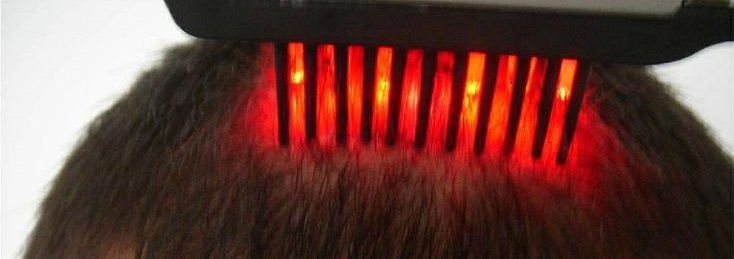
    I have a comb with lasers that is suppose to help with hair growth for my hair. Is it ḥarām (religiously prohibited) to use this or is it okay? Is this shirk because this may be associating something with Allāh’s quality of creating?

    Answer:

    Jazkā Allāh Khayr / Thank you for your question.

    Hair growth and regrowth through lasers is permissible if it is to treat baldness or physical defects. This would be regarded as a permissible medical treatment.

    “Treat sickness [and ailments], for Allāh has not created any disease except He has also created the cure” (Tirmidhī)

    In general circumstances, where there is no pressing necessity, such as disfigurement due to a fatal accident or baldness, it is generally prohibited in Islam, to have cosmetic procedures simply for beautification, due to the islamic prohibition of tampering with the natural God given body.

    “He (the Devil) said, “Surely I will take an appointed share from Your slaves, and I will lead them astray, and I will tempt them with false hopes, and I will command them, whereby they shall slit the ears of cattle, and I will command them, whereby they shall alter the creation of Allāh.” Whoever takes the Satan for friend, instead of Allāh, incurs an obvious loss.” (Qur’ān 4:119)

    And Allāh Knows Best

  • Is Smoking Hookah/Shisha Allowed in Islam?

    Is Smoking Hookah/Shisha Allowed in Islam?

    Answered by Shaykh Yusuf Badat

    Recent studies have shown that a single shisha session is the same as smoking 200 cigarettes. (See report by World Health Organisation – WHO)

    Tobacco based shisha is detrimental to health, addictive and is a means of wasting time and money.

    “There’s a misconception that shisha is not as bad for you as cigarettes, because the tobacco is flavoured and passes through water first. But the carcinogens and nicotine are still there. So a regular shisha smoker can expect to be at risk to the similar health problems that cigarette smokers face, whether that’s respiratory, heart disease or cancer. As with any other tobacco product, I expect regular shisha smokers will find it addictive, to the point that they may need it every day.” (Dr Khalid Anis, Chairman of Niche Tobacco Advisory Group – NTAG)

    Hence the use of such a substance that is detrimental to one’s health is considered prohibited or in the least makruh tahrimi (prohibitively disliked, meaning very close to haram) by majority jurists, especially when such substances are used in vain or leisure.

    Destroying one’s health through such activities is against the imperatives of the pure religion of Islam.
    “Do not put yourselves into destruction, and do good. Of course, Allah loves those who do good” (al Baqarah 2:195)
    May Allah keep us pure, healthy and away from all harmful substances through His infinite mercy.

    And Allah Knows Best

  • Zakah on a Joint Account

    Zakah on a Joint Account

    Question

    I am an adherent to Hanafi fiqh. What is the ruling on Zakah when a couple has a joint account? Is it OK if only the husband pays zakah on the total amount of the joint account? Please be aware that both husband and wife have full access to the account.

    Answered by Shaykh Yusuf Badat

    بِسْمِ اللَّـهِ الرَّحْمَـٰنِ الرَّحِيمِ

    Jazak Allah for contacting us for your query.

    The joint account of a couple would fall under the rulings of joint property (shared ownership).

    There can be several scenarios for such a joint account, hence the zakah can be paid in numerous ways.

    1. If each partner’s individual amounts are known, than each partner can discharge their zakah on their individual amounts, once the amount reaches the nisaab and a lunar year has passed.
    2. If each partner’s individual separate amounts are unknown, than there is no harm in one partner discharging the zakah on the total amount on behalf of both partners, following all the applicable rules of Zakah. However, in such a scenario, it is mandatory for the partner that is discharging the zakah, to be granted permission from the other partner for this.

    Imam Abul Hasan Al Quduri writes, “None of the partners are to pay the Zakah of the wealth of the other without his permission’ (Mukhtasar Al Quduri)

    Some general references regarding financial partnership:

    “Allah’s hand is with partners in business as long as they do not betray each other.” (Abu Dawud).

    “Profit return is shared according to conditions determined freely by partners. And the loss is dealt with according to ratio of their capitals.” (Ibn Majah)

    “Many partners oppress one another (in business), except those who believe and do righteous deeds, and very few they are.” (Holy Quran 38:24).

    And Allah Knows Best.

  • Hajj While In an Interest Based Loan

    Hajj While In an Interest Based Loan

    Question

    Aslaamualaikum, I had a few questions regarding Hajj because, Inshallah, my mom and dad are really considering it this year. They have the money to go and were skeptical about certain issues that were clouding their judgment.

    First, my mom is very hesitant to go because of the fact that we have a house and we are paying mortgage on it and within the mortgage there is interest. She believes that it would be wiser for her to go after the mortgage is paid off so she does not have to worry about interest payments and such things when she comes back. She also told me that some shuyookh say that it is permissible to own a house under interest because it is the law of the land to pay interest and there is nothing that we can do about that. So the question is, if she goes for hajj while she has to still pay interest, is it possible for her to do hajj?

    Secondly, would this interest issue void her hajj if she came back and continued to pay interest?

    Answered by Shaykh Yusuf Badat

    بِسْمِ اللَّـهِ الرَّحْمَـٰنِ الرَّحِيمِ

    Thank you for contacting us for your query.

    May Almighty Allah accept the good intentions for Hajj and make it a reality for all who intend to proceed to fulfill this obligation.

    You have raised three matters in your question:

    1. The ruling regarding proceeding for Hajj while having an interest based impermissible loan.
    2. The validity of having an interest based loan in western non muslim majority countries.
    3. The validity of Hajj, while making interest based payments, upon one’s return from Hajj.

    Please note the answers below:

    Hajj While Having an Interest Based Loan

    Hajj is only obligatory upon those who are free from debt. However if one wishes to proceed while still being in a state of debt, it is permissible. If the dept is interest based, such as in the case of your respected mother, it would be wise to first pay off the debt and then proceed for Hajj.

    As a right of Allah, it is obligatory on the people to perform Hajj of the House – on everyone who has the ability to manage (his) way to it“. (Holy Quran 3:97)

    Imam Hasan Shurunbulali in Nur Al Idah and Imam Fakhruddin Al Razi in Al Tafseer Al Kabeer have listed ‘paying all outstanding debts‘ as one of the conditions for Hajj to become fardh (mandatory). (See Nur Al Idah and Al Tafseer Al Kabeer)

    Interest Based Loans / Mortgages in Non Muslim Majority Countries

    The statement that “it is the law of the land to pay interest” is inaccurate. According to my knowledge there is no such law in Canada(and other countries) compelling citizens to purchase homes through interest based loans. In fact, there are various halal alternatives such as Islamic financing and living in rent etc. Please refer to my answer in response to a similar question by clicking here.

    Paying Interest / Usury After Returning From Hajj

    From amongst the objectives of Hajj is to renew one’s commitment to adhere to all Quranic injunctions and abandon all wrong.

    Imam Abu Bakr Jaabir Al Jazaairi writes “From the wisdom of Hajj and Umrah, is to purify oneself from the effects of sin, so that one becomes worthy of the honour of Almighty Allah, particularly in the abode hereafter” (Minhaj Al Muslim).

    Therefore, deliberately engaging in sin after one’s Hajj would not be appropriate. Despite this, it should be noted that the obligation of Hajj will be fulfilled, even though one may commit sin after one’s return from Hajj.

    And Allah Knows Best.

  • Fiqh of Salah (Prayer) on a Chair

    Fiqh of Salah (Prayer) on a Chair

    I had a question regarding when Isha time expires. I recently heard that the common view that Isha time lasts until Fajr is incorrect. Can you kindly verify or let me know when the time of Isha expires according to the Hanafi school of Islamic law?

    By: Darul Iftaa of Jamiah Islaamiyah Maseehul-Uloom, Banglore

    Translated by Mufti Shoeb Ingar with minor additions and modifications by Shaykh Yusuf Badat

    Increase of Chairs in Masaajid Prayer Halls

    The performing of Salaah on a chair has become very common in cities around the world, especially in wealthy localities. Pondering over this condition of people, it seems as if the permission granted to the people with disabilities is being used incorrectly by common worshipers, due to ignorance and misunderstanding, ultimately defecting the validity of Salaah.

    The Darul-Iftaa of “Jamiah Islaamiyah Maseehul-Uloom, Bangalore” has conducted a detailed research and analysis regarding this matter. The complete specifics and documentation of this research are present in the Darul-Iftaa and can be obtained by both the learned and those interested on the subject.

    For the benefit of the general masses, and also distribution in Masaajid (Islamic places of worship), a brief summary of the research is provided below.

    Qiyaam (Standing) in Fardh (Obligatory) Prayers

    Qiyaam, meaning to stand, is a “RUKN (integral part)” in Fardh Salaah. Fardh Salaah will be incomplete, if performed while seated by an individual who is capable of standing. The Prophet (pbuh), while travelling would at times perform Nafl Salaah (optional prayers) on his conveyance, but would always descend (climbing off the conveyance) when performing the Fardh Salaah. Never once in his life, did he (pbuh) perform his Fardh Salaah while travelling on his conveyance. If Qiyaam had not been a Rukn in Salaah, the Prophet (pbuh) would have at least once performed his Salaah while mounted on his conveyance to confirm the permissibility of doing so. The Ahaadeeth (prophetic reports) in this matter are numerous. Listed below are a few references:

    عن جابر (رضى الله عنه) قال: كان رسول الله ( صلى الله عليه وسلم ) يصلي علي راحلته حيث توجهت فاذا اراد الفريضة نزل فاستقبل القبلة- (البخارى 1/400)

    Jaabir (ra) reports, “The Messenger of Allah (pbuh) offered his prayers upon his conveyance (transportation) in which ever direction the (conveyance animal) was facing. When he intended to perform the Fardh prayer, he would climb down and face the Qibla”. (Bukhari)

    Standing for as Long As Possible is Fardh

    If a person is capable of standing, although it may not be throughout the entire Salaah, it is Fardh for him to stand for as long as possible. If such a person sits down for even the short period in which it is possible to stand, the Salaah will be incomplete!

    وان قدر على بعض القيام لزوما بقدر ما يقدر، ولو قدر آية أو تكبيرة لأن البعض معتبر بالكل (در المختار مع الشامى 2/97)

    “If one is capable of standing for a short while, it is necessary to do so in accordance to the duration of one’s ability even though it may be for the duration of (listening) to one verse or a takbeer (saying Allahu Akbar), for indeed the partial is considered for the overall”. (Dur Al Mukhtaar with Shaami)

    Standing While Reclining Rather Than Sitting

    If a person is able to stand, while gaining support from an object or leaning upon something, the Salaah will be rendered incomplete, if performed in a seated position.

    ولو قدر على القيام متكئا ، الصحيح أنه يصلى قائما متكئا ولا يجزيه غير ذلك وكذلك لو قدر على ان يعتمد على عصا أو على خادم له فانه يقوم و يتكئ ( الشامى 2/97)

    “If one has the ability to stand while leaning, the correct view is that one should offer the prayer while in a standing position reclining on something. It would not be correct to do other than that. Similarly, if one has the strength to lean on a staff or an attendant, he is to stand and lean (for prayers)” (Shaami)

    Who is Excused From Standing in Fardh Prayers?

    A person will only be considered “excused” or “exempt” (from standing) who is unable to stand at all under any circumstances. If he were to stand, he would fall down, become sick or the illness would increase and prolong. An experienced, righteous Muslim doctor’s advice would be required to confirm this condition. Islamically, all other pretexts would not be taken into consideration for being exempt from the mandatory standing during prayer.

    اراد بالتعذر الحقيقى بحيث لو قام سقط ، أو حكمى بان خاف زيادته أو بطئ برئه بقيامه ، أو دوران رأسه ، أو وجد لقيامه ألما شديدا ، صلى قاعدا ( الدرالمختار مع الشامى 2/96)

    “The physical sense of the exemption (from standing) is the condition where if one is to stand, they would definitely fall. The elusive sense of the exemption would be in the condition where the standing would result in fear of worsening of the health condition, delay in gaining cure for one’s ailment, dizziness of the head, or experiencing unbearable pain by standing. It is only in these conditions one may perform the prayers, while seated”. (Dur Al Mukhtaar with Shaami)

    Minor Average Slight Pain

    It is impermissible for a person with average pain (which is bearable) to perform Salaah in a seated position.

    فان لحقه نوع مشقة لم يجز ترك ذلك القيام (1/136)

    “If one experiences the average slight difficulty, it is impermissible for such a person to abandon the standing position due to such a minor inconvenience” (Shaami)

    If we analyze the situation today of Salaah being performed on a chair, we would find the majority invalidating their Salaah. The same majority who are seen attending their daily needs, standing, walking and roaming around throughout the day, yet when Salaahapproaches, they become apparently physically disabled.

    The Correct Way of Sitting, If One is Genuinely Unable to Stand

    Salaah performed on a chair will be incomplete if a person is capable of sitting on the ground and doing sujood (prostration). This ruling applies to one, even though one may not be capable of standing in Qiyaam.

    Sitting on the Ground Versus on a Chair, Even if One is Genuinely Unable to Render Qiyaam and Sujood

    If a person is able to sit on the ground and perform Salaah, though the person may be incapable of doing sujood (prostration on the ground), the person should perform Salaah seated on the ground while gesturing for sujood (prostration). In this condition, it is preferred for a person to sit on the ground and offer the prayer rather than on a chair. It is also preferred for a person sitting and praying to sit in the position of Tashahhud (seated posture in prayer while reciting Al Tahiyyatu). if this is not possible, then any other position comfortable for the worshiper may be adopted.

    ينبغى ان يقال: ان كان جلوسه كما يجلس للتشهد ايسر عليه من غيره أو مساويا لغيره كان اولى ، والا اختار الايسر فى جميع الحالات (در المختار 2/97)

    “The seating posture of Tashahhud, if possible, is superior to any other posture. If sitting in the Tashahhud posture is not possible, the worshiper is to opt for any suitable position in all circumstances”. (Dur Al Mukhtaar)

    Responsibility of Individuals and Masjid Management Committees

    The Salaah of those individuals who offered prayer on chairs while being unaware of the correct rulings, will be rendered incomplete. Ignorance is not an excuse and therefore the Salaah are to be repeated! The Masaajid may arrange for chairs to serve those genuinely considered “excused” in accordance to the Shariah however the chairs should be available as per the requirement of each congregation. The practice of performing salaah on chairs is not to be encouraged. The correct rulings for Salaah offered on chairs should also be posted somewhere near the chairs.

    The Practice of Stretching Hands Is Incorrect While on Chairs

    It has been commonly noticed that those performing Salaah on chairs extend the hands forward while doing Rukuu and Sujood, this is also incorrect. The hands must remain on the thighs while gesturing with the head only.

    The Ruling for Nafl Prayers (Optional Prayers)

    Although Qiyaam (standing) is not a Rukn (Integral part) in Nafl Salaah (optional prayers), it must be borne in mind that the Sujood(prostration) still remains a Rukn!. Hence, Nafl Salaah will be regarded incomplete on a chair with gestures, if a person is capable of sitting down to do sujood on the ground. (Al Fataawa Al Hindiyaah 490/3)

    And Allah Knows Best

  • Who is she?

    Who is she?

    Spoken word by Waqas Choudhry

    We rise every morning in hopes of a good day. Some get ready for work, to get their pay.

    Life you see, it’s all become a daily routine. One day after another with no bother.

    “I’ll be late today, don’t wait for me to eat”, we say, she packs me a lunch anyway.

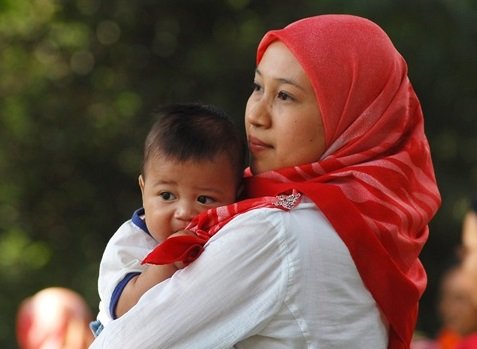
    Who is she? She is a mother, that one person who will do anything for you without a bother. If only we ponder!

    We spend all day chilling with our friends with no worries, coming home to help her should be our thing, but do we even bother?

    You see she struggles all day for us, waits until we get off the bus.

    Who is she? She is a mother, that one person who will do anything for you without a bother. If only we ponder!

    As she gets older, wrinkles begin to appear, she smiles so we don’t fear.

    We neglect her rather than protect her. How great of a blessing we forget?

    She’s a gift from Allah, which we must protect.

    Pray for her, cherish her for all she does, because life will pass by as fast as a speeding bus.

    Who is she? She is a mother, that one person who will do anything for you without a bother. If only we ponder!